

Urban greening projects are not neutral. They shape cities by enacting certain visions of the future while sidelining others. In this blogpost, Lisette van Beek discusses the importance of unravelling this ‘politics of imagination’ and what the Naturescapes project might contribute.
The politics of imagining naturescapes
Is green always good?
While the term ‘nature-based solution’ is gaining in popularity, the greening of cities is nothing new. Parks, trees and gardens have always been initiated in cities to create better living conditions [1].
Perhaps what is different about nature-based solutions is their expectation to solve a large range of urban challenges from climate resilience to public health. In practice, though, these benefits often flow to specific groups, reinforcing social and racial inequalities, a phenomenon known as green gentrification [2].
Greening projects also tend to reflect hidden assumptions about what a city should look like and who should benefit. But because ‘nature’ is seen as universally good, these visions are left unquestioned [3]. Who, after all, is against greener cities?

Author: Lisette van Beek
Lisette is an interdisciplinary social scientist based at Political Science, Lund University. Her research focuses on the politics of imagining sustainable futures, interested mainly in the role of expertise, arts-based methods and prefigurative politics. She loves hiking and running in the forest with her dog, cooking and playing football.
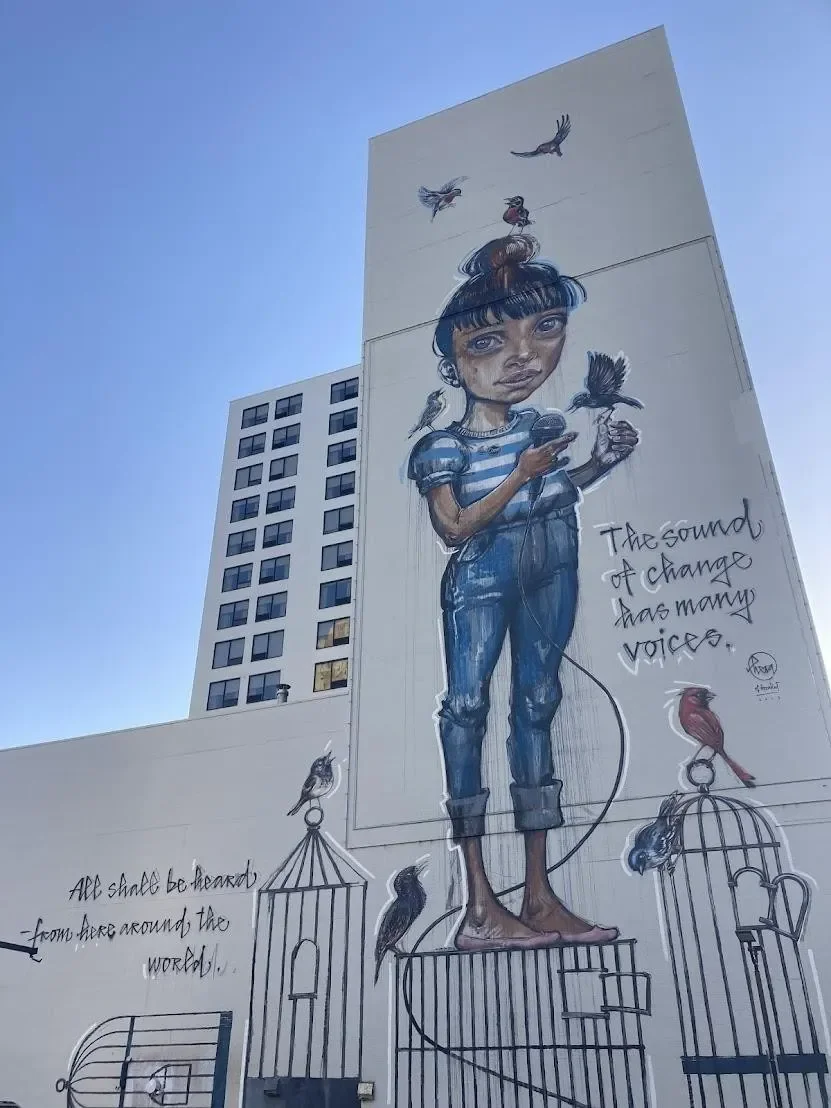
Figure 1. Mural in Detroit, USA. Photo source: Anouk Fransen.
The power of imaginaries
To unpack these assumptions, we focus on naturescape imaginaries — collective visions of what urban nature should look like. These imaginaries shape how cities approach greening projects, from design to implementation.
Take Berlin, for example. A dominant vision there is the “sponge city” — a city designed to absorb and manage rainwater naturally. Since 2014, this idea has guided many projects, from green roofs to rain gardens. It is a compelling and practical vision that has helped to unify greening efforts across the city, as my colleague Katrin Merfeld found during her fieldwork.
But the imaginary also has its drawbacks. By focusing mainly on rainwater management — like infiltration and evaporation — it risks overlooking justice considerations. Perhaps more fundamentally, it treats nature as an object to be managed and benefit human residents, rather than an emergent living system. As argued by Iris Moeller in her blog post, such an instrumental approach can limit the potential for transformative change.
Not just a lack of imagination
Luckily, cities are full of radically different visions of the future.
To stay with Berlin as example, the Floating University is a cultural space built at a former airport that has become a wetland ecosystem. Through exhibitions, festivals and public experiments, it challenges dominant ideas of nature and promotes concepts like ‘careful transformation’ and ‘radical care’.
Naturescapes researchers have found similar initiatives that imagine and build alternative futures across the world. In Cagliari, art collectives explore alternative ways of living with nature through embodiment and sensory experience. In Detroit and Fort-de-France, urban gardening projects are reclaiming food sovereignty as powerful acts of resistance against legacies of neglect and colonisation, like the D-Town Farm and Ypiranga de Pastinha Martinique.
We often hear that there is a crisis of imagination. But there is no shortage of bold and inspiring visions. What is lacking is the power and resources to bring them to life.
This is the politics of imagination: some imagined futures gain traction and are made possible, while others are pushed aside. How can we build capacities to imagine — and pursue — more just and sustainable futures?
Building the capacity to aspire
Imagination alone is not enough. Without the tools, knowledge, and support to act on them, alternative visions remain fantasies. For me, the key to transformative change therefore lies in enhancing what Arjan Appadurai calls the ‘capacity to aspire’: the abilities of communities to plan, dream and shape alternative futures [4].
Research plays a key role here. By providing tools to generate new knowledge and supporting communities to voice their marginalised perspectives, we can help turn imagination into action.
This is no easy task. But I am confident that the Naturescapes project, through collaborative research and creative interventions, can support the imagination — and realisation — of the urban nature futures we need
[1] Chkird, F., Kouddane, N. E., Azizi, S. E., Boukroute, A., & Berrichi, A. (2024). From Antiquity to the Present: A Perpetually Evolving History of Green Spaces. In E3S Web of Conferences (Vol. 527, p. 03006). EDP Sciences.
[2] Anguelovski, I., Connolly, J. J., Cole, H., Garcia-Lamarca, M., Triguero-Mas, M., Baró, F., … & Minaya, J. M. (2022). Green gentrification in European and North American cities. Nature communications, 13(1), 3816. https://doi.org/10.1038/s41467-022-31572-1
[3] Angelo, H. (2021). How green became good: Urbanized nature and the making of cities and citizens. University of Chicago Press.
[4] Appadurai, A. (2013). The future as cultural fact. Essays on the global condition. Verso Books.