

Urban nature-based solutions are often justified by what they can do for us, such as cooling our streets, soaking up excess floodwater, or enhancing biodiversity. But what about the values that make a place feel like home? My research asks whose values we design into urban nature, and what will happen as AI planning tools scale them up.
Room to be a little bit wild: Whose values are we designing into urban nature?
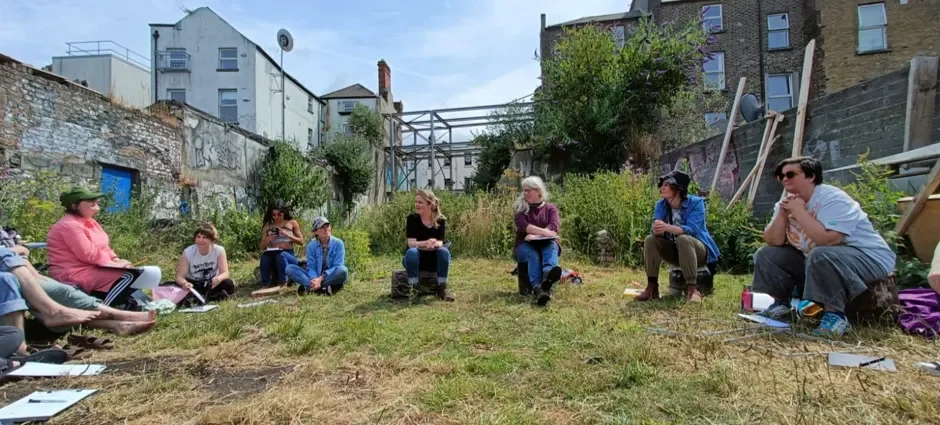
Figure 1: A workshop in Dublin, where participants discuss the perspectives of various species, both human and non-human. Photo: M. O’Donnell.
I think that unkeptness kind of makes me feel at home because I can be a little bit wild as well.
A workshop participant in Melbourne said this, and it has stayed with me ever since. This statement caught my attention as they didn’t describe what the space does for them. It was actually more about who they can be there.
This is what is often referred to as relational values: the meaning that comes from our relationships with nature and with each other, like belonging, identity, and care. They sit alongside instrumental values (what nature does for us) and intrinsic values (nature’s worth in its own right) [1]. Instrumental values often shape the design of urban NbS, and this valuation and design risks producing tidy, measurable nature that people don’t feel connected to. And, at the end of the day, that may not be enough to tackle the sustainability challenges we face.
One plant, many values
On one of my fieldwork walks, a participant told me about an architect she had once met who couldn’t stand Buddleia. To the architect, it was “the enemy of builders”, emerging through cracks and damaging walls. To this participant, though, the same plant is a beautiful splash of purple in a forgotten corner, as well as a magnet for butterflies.
Neither view is wrong; they just reflect different values, but most design decisions quietly choose between them. Mow or leave it? Fence it off or open it up? In practice, we often default to what’s easiest to measure and maintain. The values that are harder to count, such as belonging or memories, therefore get designed out, often without anyone explicitly deciding they should be.
Author: Mairéad O’Donnell
I’m a postdoctoral researcher at Trinity College Dublin working on the Naturescapes project. My research explores how communities imagine, relate to, and co-design urban nature, drawing on empirical work on urban nature imaginaries and multispecies co-design. Outside of work, you’ll usually find me out running or wandering about with my camera, photographing nature.
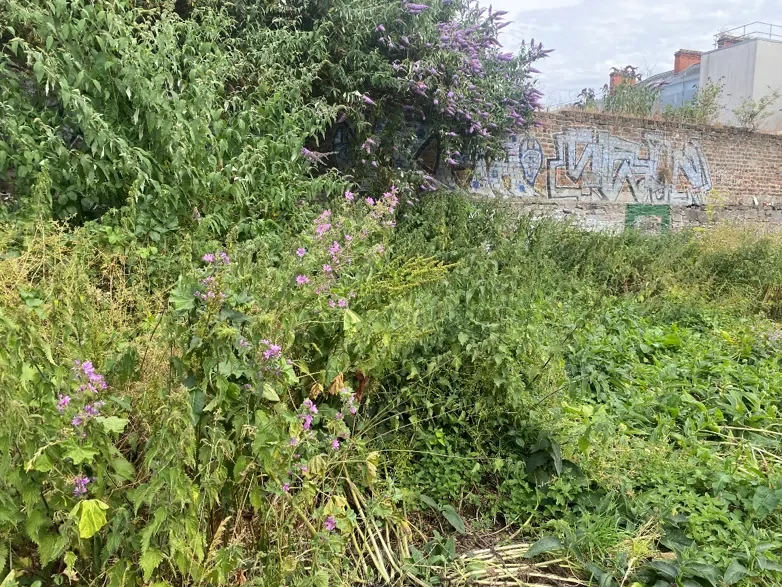
Figure 2. An overlooked corner in Dublin: Buddleia grows up against a graffitied wall, above a tangle of grasses, scrambling bindweed and wildflowers. To some it’s “the enemy of builders”, to others a haven for butterflies. Photo: M. O’Donnell.
Designing with, not for
Working alongside communities in Dublin, in New York’s North Brooklyn waterfront and in Melbourne, three lessons stood out for me [2,3].
Listen across disagreement. The participant who told me the Buddleia story concluded that we need to “really listen… to other people’s points of view, even if you don’t necessarily agree”. Co-design isn’t about consensus. It’s about making frictions visible so we can work through them together.
Start with stories, not species lists. As another participant put it, rather than saying “this is a cuckoo flower, that’s it”, ask people whether they have a memory or a story of it. Stories open the door to relational values in a way that labels can’t.
Choose connection over protection alone. Protection matters, but if, as another participant put it, nature is “behind the high fences, there’s no value on it”. People value what they can spend time with.
We have also heard these ideas being echoed through our research in Naturescapes. As one interviewee in Phoenix told us: “you have to take care of it and the land will take care of you back”.
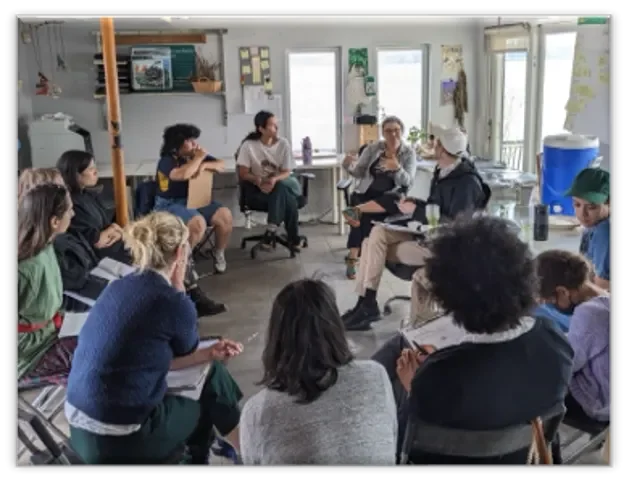
Figure 3. Participants share stories and perspectives during a co-design workshop in Manhattan, New York. Photo: C. Cooper.
What will it take? Scaling up with diverse values
These discussions around values matter more as we change how we plan cities. AI-driven tools increasingly help planners decide where to plant trees, which sites to prioritise and how to measure success. But they often optimise for whatever they’re asked to, and what’s easiest to quantify is almost always instrumental, e.g., canopy cover, cooling temperature, stormwater volume. If we don’t build relational and intrinsic values into these tools, we risk repeating the same blind spots on a much larger scale.
Transformative change means designing for plural values from the start. Approaches like the Nature Futures Framework, which puts nature for nature, nature for society and nature as culture side by side, can help. In Naturescapes, we use ideas like these to explore how people in cities imagine urban nature, and where those visions may clash, generating productive frictions.
It also means accepting that urban nature is never finished. As one participant during my fieldwork reminded me: “we’re not building something that we think is going to keep a system static for all time, because that’s hubris”. Embracing that humility, sitting with incompleteness rather than resolving it, may be the most transformative thing we can do; leaving a little room for the wild, in our cities and in ourselves.
[1] Pascual, U., Balvanera, P., Anderson, C.B. et al. Diverse values of nature for sustainability. Nature 620, 813–823 (2023). https://doi.org/10.1038/s41586-023-06406-9
[2] O’Donnell, M., Pineda-Pinto, M., Andersson, E. and Collier, M., 2026. From control to cohabitation: Social-ecological insights on urban wildness narratives. Urban Forestry & Urban Greening, p.129279. https://doi.org/10.1016/j.ufug.2026.129279
[3] O’Donnell, M., Pineda-Pinto, M., Kennedy, C.L., McPhearson, T., Bloodgood, L. and Collier, M.J., 2026. Exploring multispecies co-design for social-ecological transformation. Ecology and Society, 31(2).