

Green roofs, living walls, rain gardens, and urban wetlands are becoming more familiar features in planning documents and climate strategies. Yet one persistent question remains: how do we move from isolated interventions to landscapes where buildings, ecosystems, and communities work together?
When buildings become Naturescapes: How EcoBUILD can help bridge ecological knowledge and urban design
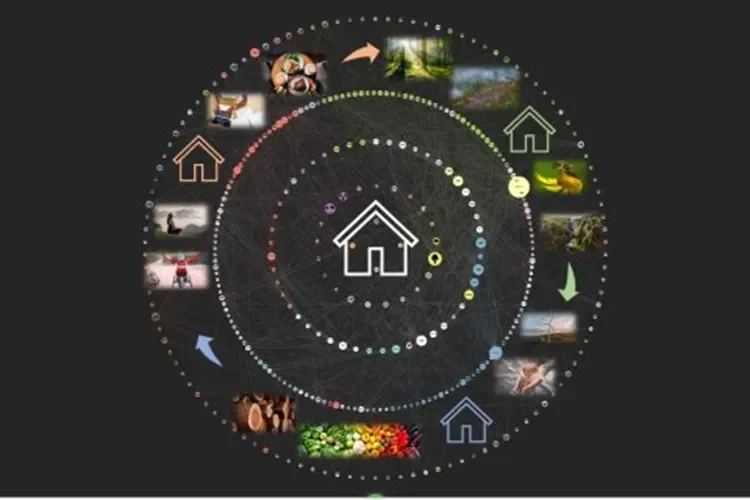
Figure 1. Screenshot of the initial ‘strategies for designing urban ecosystem services’ diagram from which EcoBUILD derived
Nature-based solutions (NbS) are increasingly shaping the way we imagine sustainable cities. While NbS are often discussed for parks, rivers, and urban forests, buildings themselves are still rarely treated as ecological actors.
Buildings as part of urban ecosystems
Cities are often imagined as the opposite of nature. Buildings, infrastructure, and paved surfaces are seen as spaces where ecological processes have been replaced by engineered systems. Yet urban ecologists have long argued that cities are complex socio-ecological systems, where human and non-human life constantly interact.
In this perspective, buildings are not simply inert structures. They are habitats, microclimates, and surfaces where ecological processes can unfold.
A green roof can provide refuge for pollinators, while providing space for relaxation.
A façade garden can support urban biodiversity and maybe provide herbs to pick for a tea?
A water retention system can regulate stormwater on buildings and save it to water plants.
Big questions are asked such as how multiple nature-based solutions combine and interact with each other and with mechanical or technological solutions, and how they scale across cities.
Many numbers are lacking still because they have never been measured. Some information and numbers are existing, but hidden in scientific articles and sometimes even in showcased buildings on websites
To implement targeted designs effectively, we also need better ways of linking ecological knowledge with the everyday decisions made by architects, planners, and developers.
From scattered knowledge to design intelligence
One of the biggest barriers to integrating ecology into urban design is knowledge fragmentation.
Research on green roofs, urban biodiversity, building energy systems, and ecosystem services exists across hundreds of scientific papers, case studies, and technical reports. For practitioners, navigating this landscape of evidence is difficult and time intensive due to field terminology and a format that is not useful to practitioners.
EcoBUILD, a research initiative at Utrecht University funded as signature project by Pathways to Sustainability, explores how data-driven tools can help bridge this gap between ecological science and building design.
The idea is simple yet powerful: creating a structured knowledge base linking existing sustainable design strategies, including green roofs, green walls, solar panels, or water retention or filtration systems, to their measurable environmental and social benefits.
Instead of asking whether a green roof is “good,” planners and designers could explore more nuanced questions:
· How much cooling does it provide in dense urban areas?
· What biodiversity benefits does it generate?
· How does it interact with other nature-based solutions nearby?
· Under what conditions does it perform best?
By organizing scientific evidence into accessible datasets and decision tools, EcoBUILD aims to make ecological knowledge actionable in design processes.
In other words, it seeks to translate ecological complexity into something that can inform real planning decisions.
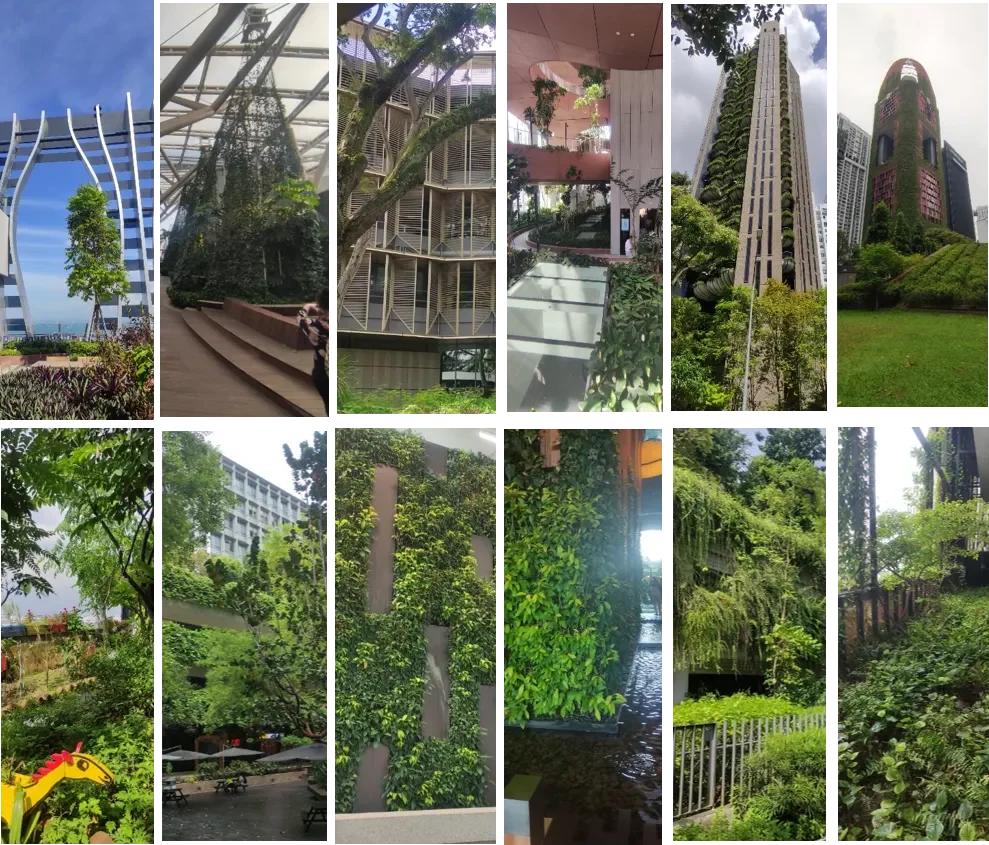
Figure 2. Examples of buildings in Singapore that integrate ecosystem services generating strategies using mechanical and nature-based design
Connecting buildings to the landscape perspective
This is where EcoBUILD intersects strongly with the concept of naturescapes.
The NATURESCAPES project is investigating how NbS operate across functional urban areas, examining their combined impacts on climate, biodiversity, and communities.
But for these landscape-scale transformations to happen, ecological thinking also needs to reach the building scale, where many decisions about urban form are actually made.
Buildings are the most common elements of our cities. If designed differently, they could collectively form a dense network of ecological infrastructures: pollinator corridors across rooftops, water-retaining courtyards that reduce flood risk, or vegetated façades that moderate urban heat.
Seen this way, buildings are not just part of cities but they are building blocks of future naturescapes.
EcoBUILD therefore asks a complementary question to the NATURESCAPES project: How can ecological knowledge be embedded directly into building design decisions so that urban landscapes evolve in more regenerative ways?
Towards regenerative urban design
The shift toward regenerative cities requires more than adding greenery to buildings. It requires rethinking how architecture, infrastructure, and ecosystems interact across scales.
Data, design tools, and open knowledge platforms cannot solve this challenge alone. But they can help researchers, planners, and designers navigate complexity and experiment with new possibilities.
By connecting ecological science with the everyday practices of urban design, initiatives like EcoBUILD can support the broader goal that the NATURESCAPES project explores: creating landscapes where nature-based solutions work together to produce climate resilience, biodiversity, and social wellbeing.
In the end, the question may not be whether cities can coexist with nature.
It may be whether we are ready to design cities where nature is part of every building and where every building is part of living naturescapes.

Author: Katharina Hecht
I am an environmental scientist and ecologist working at the interface of ecology, urban design, and sustainability science. My research focuses on ecosystem services, regenerative design, and how ecological knowledge can inform sustainable buildings and cities.
More reads
https://dspace.library.uu.nl/items/e3bedd09-bd7c-4256-9ebb-79f9c7030403
https://www.youtube.com/watch?v=NdFSIIp4SNI
https://website-c6762e67.mof.fxh.temporary.site/nbs-guide/
https://www.sciencedirect.com/science/article/pii/S0360132324011508
https://www.uu.nl/publicatie/groene-gevels-houden-gebouwen-koeler-en-krikken-biodiversiteit-op