

Groundwater is an important resource for the future, given increasing climatic risks such as droughts, flooding, and water contamination. This blogpost introduces the ClimEx-PE project , which is exploring how we can make these invisible resources more visible through a new type of nature-based approach.
Connecting Visible and Invisible Waters: How we can link groundwater management and nature-based solutions for mitigation of climate extremes
In 2022,UNESCO launched the World Water Day theme ‘Groundwater: Making the invisible visible’ to raise awareness about the importance of groundwater resources for sustaining ecosystems and for climate adaptation. While this message has been carried beyond this campaign, the general public’s knowledge about groundwater remains limited. In response, experts are seeking to bring further attention to the potential of innovative groundwater solutions for addressing climate extremes and ensuring sustainable water supply, now and into the future.
As part of these efforts, a team of researchers from Hungary, Spain, Ireland, and the Netherlands launched the Water4All ClimEx-PE project — Climate Extremes Buffering through Groundwater Flow-based Managed Aquifer Recharge and Public Engagement. ClimEx-PE is a multidisciplinary project focused on Managed Aquifer Recharge (MAR) solutions, particularly creating a nature-based MAR approach to support adaptation to droughts, floods and other water-related extremes. An important aspect of this work includes knowledge mapping with professionals in water management, as well as working with local stakeholders at various European case sites to understand the potential of this approach.
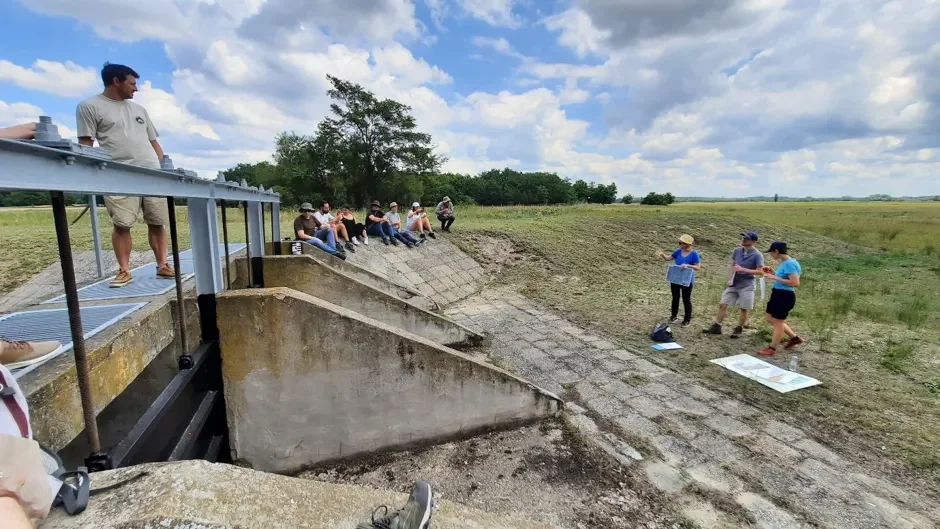
Part of the ClimEx-PE team at a site visit in Hungary (photo credit: Ildikó Erhardt)
What is Managed Aquifer Recharge?
Managed Aquifer Recharge (MAR) is an engineering approach to the intentional recharge of water to aquifers using both natural systems and built infrastructure to secure and store surface water, stormwater, treated waste water, or excess water in general. MAR is often adapted to local conditions, offering numerous benefits, including improving groundwater quality, securing and enhancing water supplies, and maintaining environmental flows [1].
There have been significant advances in the technical and physical aspects of MAR, but research has been lacking regarding the social, economic, and governance aspects of these solutions. The ClimEx-PE project aims to enhance consideration for these factors, highlighting how they influence the impacts that MAR approaches and future nature-based interventions will have on a community.
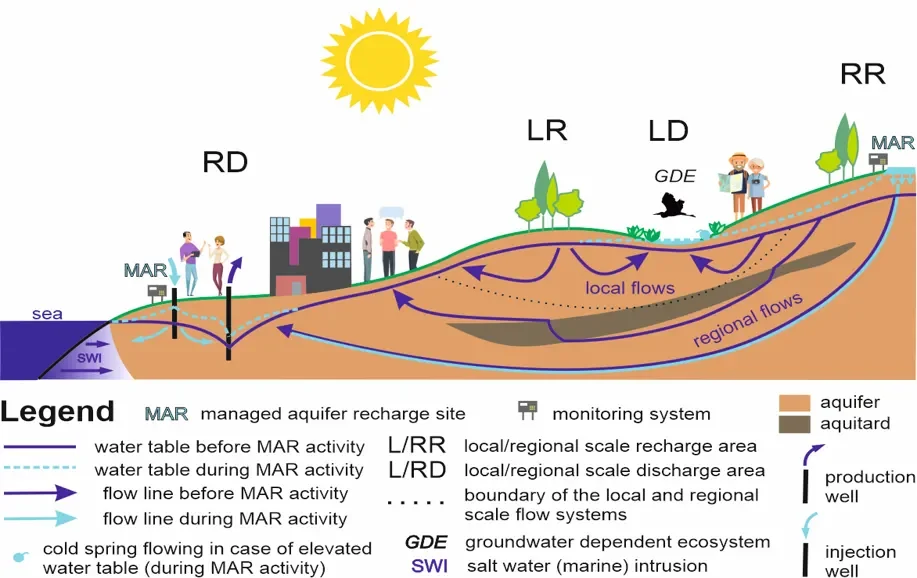
Managed Aquifer Recharge on the landscape scale (ClimEx-PE, 2024)
Is Managed Aquifer Recharge a Nature-Based Solution?
MAR can accelerate or rehabilitate natural groundwater flow processes while sustaining sensitive environments [2]. In this sense, MAR can be considered a nature-based solution to conserve or restore natural ecosystems as well as to mitigate the effects of climate change. Presenting MAR as a nature-based tool for water management then emphasizes the significance of subsurface waters in responding to climate extremes.
If MAR is truly to be considered a nature-based solution though, nature-based MAR needs to emphasize producing environmental and social benefits for communities. For our ClimEx-PE research, we are collaborating with natural scientists, social scientists, and legal experts, investigating how nature-based MAR can be economically, environmentally, technologically, and socially sustainable. At Utrecht University, I’m working with my colleague Ádám Toth to better define what makes MAR a nature-based solution, considering the significant role and influence of contextual conditions.
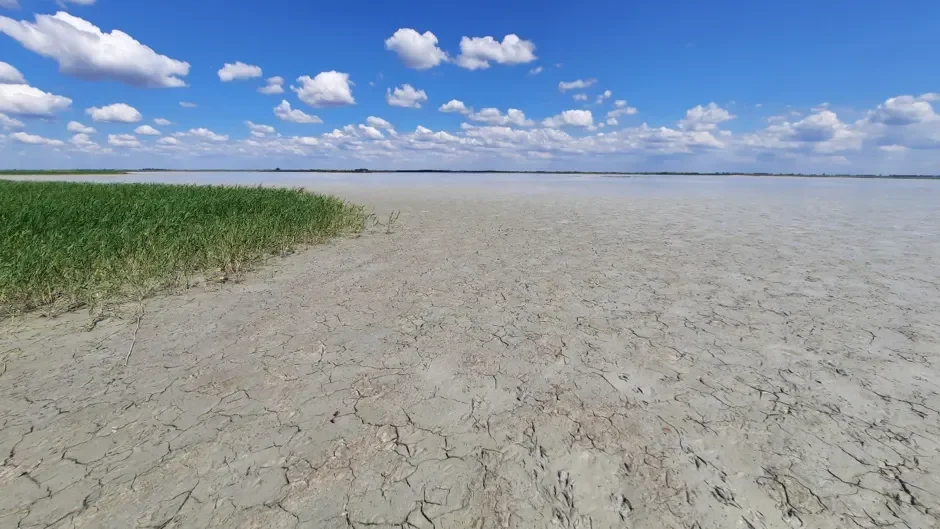
A dry lakebed in Hungary due to prolonged droughts (photo credit: Ildikó Erhardt)
Existing research tells us that integrating nature-based approaches into broader resource management frameworks can improve water availability, water quality, and flood management simultaneously by optimizing systems for co-management and maintenance [3]. Additionally, enhanced engagement in the development of new water management approaches can foster community ownership in reshaping their landscapes for improved overall well-being [4]. As water resources become further stressed due to climate change, comprehensive and locally oriented approaches to water management are increasingly necessary.
That’s why we are actively engaging with stakeholders across project case sites in Hungary, Ireland and Spain as part of our ClimEx-PE work. Specifically, we are learning with stakeholders, conducting a knowledge mapping exercise to gain a better understanding of perceptions about present and future water management challenges, as well as the potential of nature-based solutions and MAR. Through these real-world, context-based analyses, we work with stakeholders to emphasize improvements to livability and socio-cultural benefits through water resource management in these communities.
In line with Water4All’s vision, we are “fostering the matchmaking between problem owners and solution providers for ensuring water security for all in the long term.” Helping to make ‘invisible’ water resources more visible, we aim to contribute to the cooperation and transformations required to support climate adaptation.
[1] Dillon, P., Stuyfzand, P., Grischek, T. et al. Sixty years of global progress in managed aquifer recharge. Hydrogeology Journal 27, 1–30 (2019). https://doi.org/10.1007/s10040-018-1841-z
[2] Dillon, P., Fernández Escalante, E., Megdal, S. B., & Massmann, G. (2020). Managed Aquifer Recharge for Water Resilience. Water, 12(7), 1846. https://doi.org/10.3390/w12071846
[3] Seidl, C., Wheeler, S. A., & Page, D. (2024). Understanding the global success criteria for managed aquifer recharge schemes. Journal of Hydrology, 628, 130469. https://doi.org/10.1016/j.jhydrol.2023.130469
[4] Liu, L., Dobson, B., & Mijic, A. (2023). Optimisation of urban-rural nature-based solutions for integrated catchment water management. Journal of Environmental Management, 329, 117045.

Author: Jessica Lillquist
Jessica is a postdoctoral researcher at the Utrecht University School of Economics. She investigates stakeholder perspectives and values to inform the design and implementation of climate adaptation strategies. In her spare time, she enjoys swimming, cooking/baking, and exploring local spots in Utrecht.